
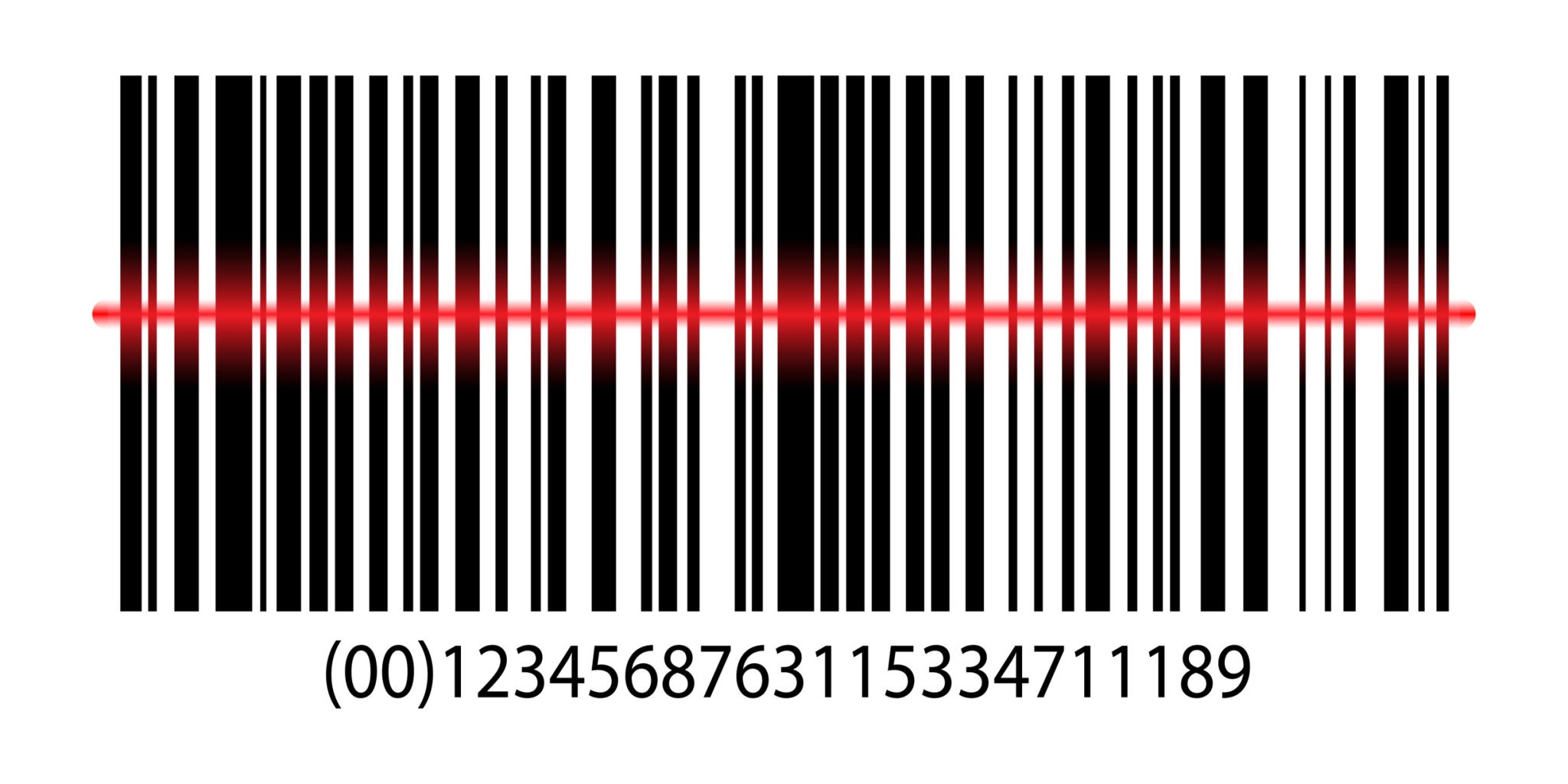
The Tuesday afternoon queue smells of floor wax, warm brown bread, and the vinegar tang of tinned fish. Ahead of you, a woman is balancing a tray of thirty eggs on one hip while her nephew tests the structural integrity of a cardboard biscuit box with his shoe. The fluorescent tubes overhead hum their low, droning syllable, vibrating in the iron rafters of the supermarket. At the till, the conveyor belt jerks forward in three-inch lurches, carrying packets of maize meal, laundry soap, and long-life milk toward the stainless steel well where the cashier sits.
Her hands move with the automatic, unseeing precision of a weaver. She takes a carton of milk, tilts it sideways, and drags it across a glass pane flush with the metal counter. A thin crimson wire of light slices across the cardboard, catches the patch of zebra stripes, and releases a clean, electronic chirp. The price registers on the green screen. The carton slides down into the bagging area.
We watch this transaction hundreds of times a year and think we know what just happened. If you polled everyone waiting in that aisle, all twenty-five people would agree on the physics: the red needle saw the black lines. We are creatures raised on ink, paper, signatures, and stamps; whenever dark pigment is pressed against a pale background, our eyes assume the dark pigment holds the authority.

The machine does not share our superstition. To the scanner, the black ink is a void. It is a ditch. It is dead, light-eating carbon that absorbs the red frequency, converts the photons into microscopic smears of heat, and offers absolutely nothing in return. The machine does not read the ink because the ink has nothing to say to a beam of light.
What the scanner actually hunts… the part it devours to extract meaning is the pale cardboard sitting between the lines.
Beneath that little scratched window of tempered glass sits an oscillating mirror pivoting on a tiny hinge, a red laser diode, and a photodetector sensitive enough to register fractions of an electrical volt. When the cashier scans the item, the mirror whips the beam back and forth across the packaging hundreds of times every second. Whenever the beam strikes a black stripe, the light vanishes, swallowed whole by the pigment. But the moment the beam skids off the dark and hits the bare white packaging, the smooth paper acts like a wall of mirrors, bouncing the red photons right back down through the glass into the photodetector’s waiting sensor.

The machine measures the echoes of the light that survived.
When the reflection comes back bright and sharp, the sensor’s circuit spikes with electrical current. When the light falls into a dark stripe and dies, the voltage drops to zero. High voltage, zero voltage. Pulse, silence, pulse, silence. The scanner does not see stripes on cardboard; it hears a telegraph operator hammering out a frantic, binary rhythm at thousands of taps per second. The black ink exists only as silence; the necessary pauses between syllables to prevent the reflected light from blurring into one continuous, blinding glare.
This is why the till operators will sometimes attempt to scan an item’s barcode three times with mounting, silent fury, their jaw clenching as the machine refuses to sing. They think the scanner is struggling to see the code. In truth, the white cardboard has caught a film of condensation from the fridge, or grease from a leaking bottle of cooking oil, scattering the reflection so the light cannot find its way back down into the chamber. The scanner isn’t blind to the ink; it is starving for the bounce.
There is something weird about the whole design. We live in an era obsessed with loud statements, declarations, bold typefaces, and ink spilled across screens to prove we exist. Yet the humble barcode, coordinating freight trains, cargo ships, and the Friday milk queue since before most of us were born, runs entirely on the negative space. It trusts only the light that bounces back from the parts we left blank.
Like this post?
If you enjoy stories that strip away the clean surface of modern technology to examine the surprising physics, physical mechanics, and everyday illusions ticking beneath our routines, subscribe below.
Leave a Reply